English is a morphophonemic language, written with letters that encode both sound and meaning. As Denise Eide of Logic of English explains, “English words are comprised of two components: phonemes and morphemes. Students need knowledge of both phonology and morphology to fully understand the written code of English.” You can read more in her article about morphemes.
Learning about morphology is helpful for building vocabulary. Studying morphemes through word roots, prefixes, and suffixes is even more powerful when combined with phonics of the language of origin. Within each language of origin, spellings are much more regular. Learning the sound spelling patterns of each of English’s main languages of origin is powerful and multiplicative—an efficient way to learn more about our language by looking at several different levels of language at once.
English is, at base, a Germanic language. Most of our common words come from Old English or other Germanic languages.
40L’s Old English/Germanic and French morphology document has common roots, prefixes, and suffixes. It also ties phonology to morphology, showing how different suffix patterns within each language of origin tie to grammar, showing the part of speech. The part of speech section also includes Latin and Greek.
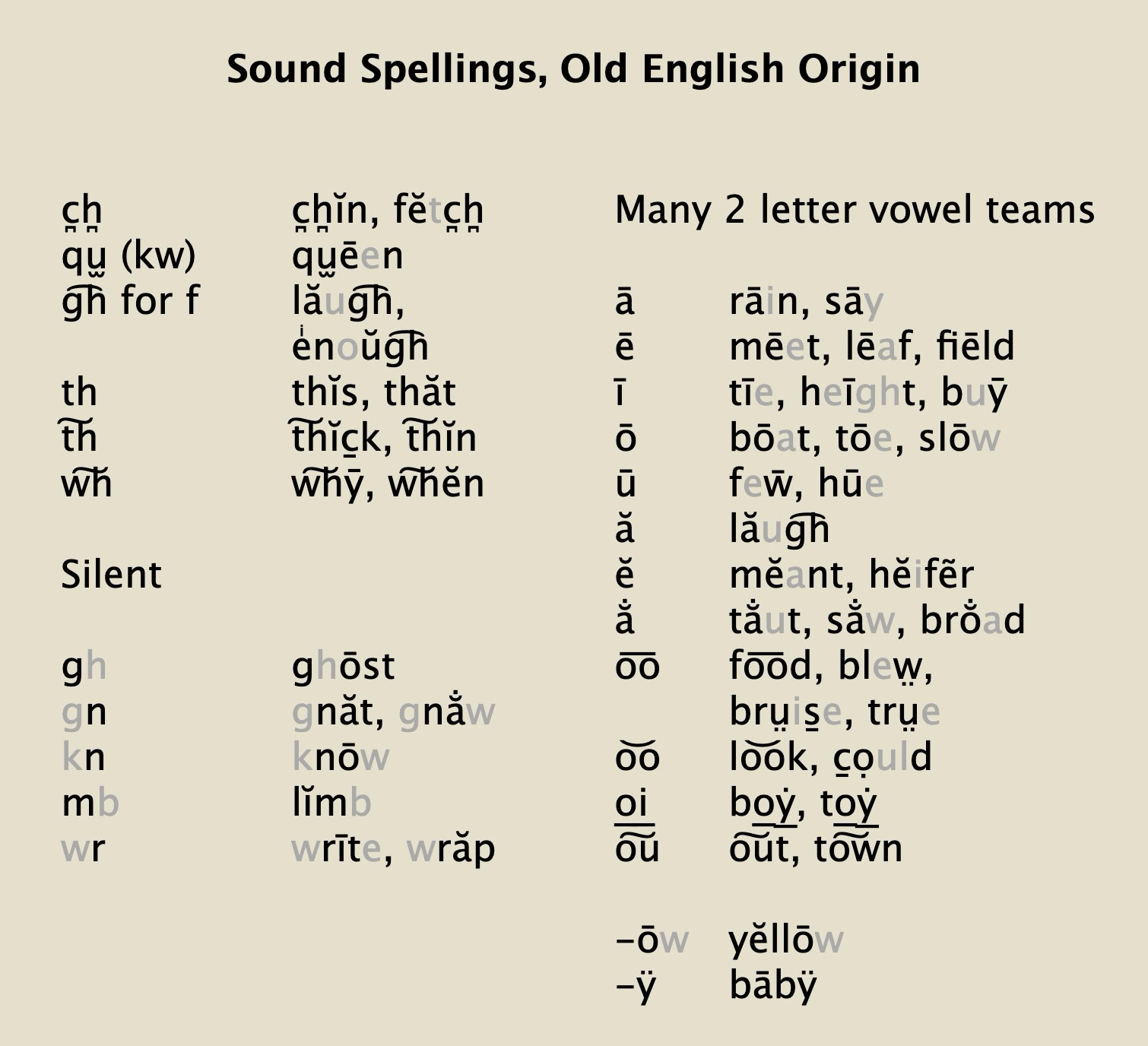
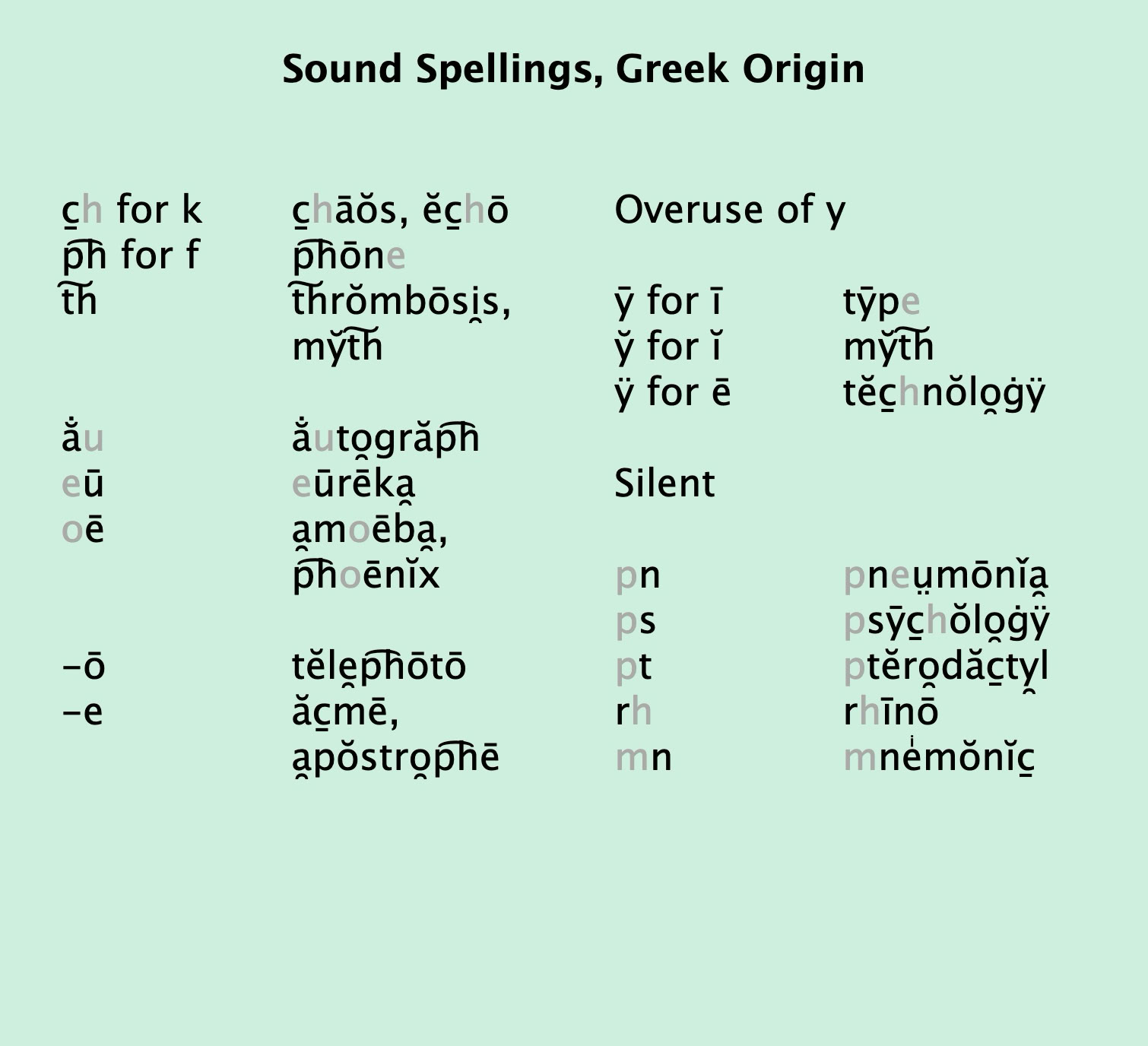
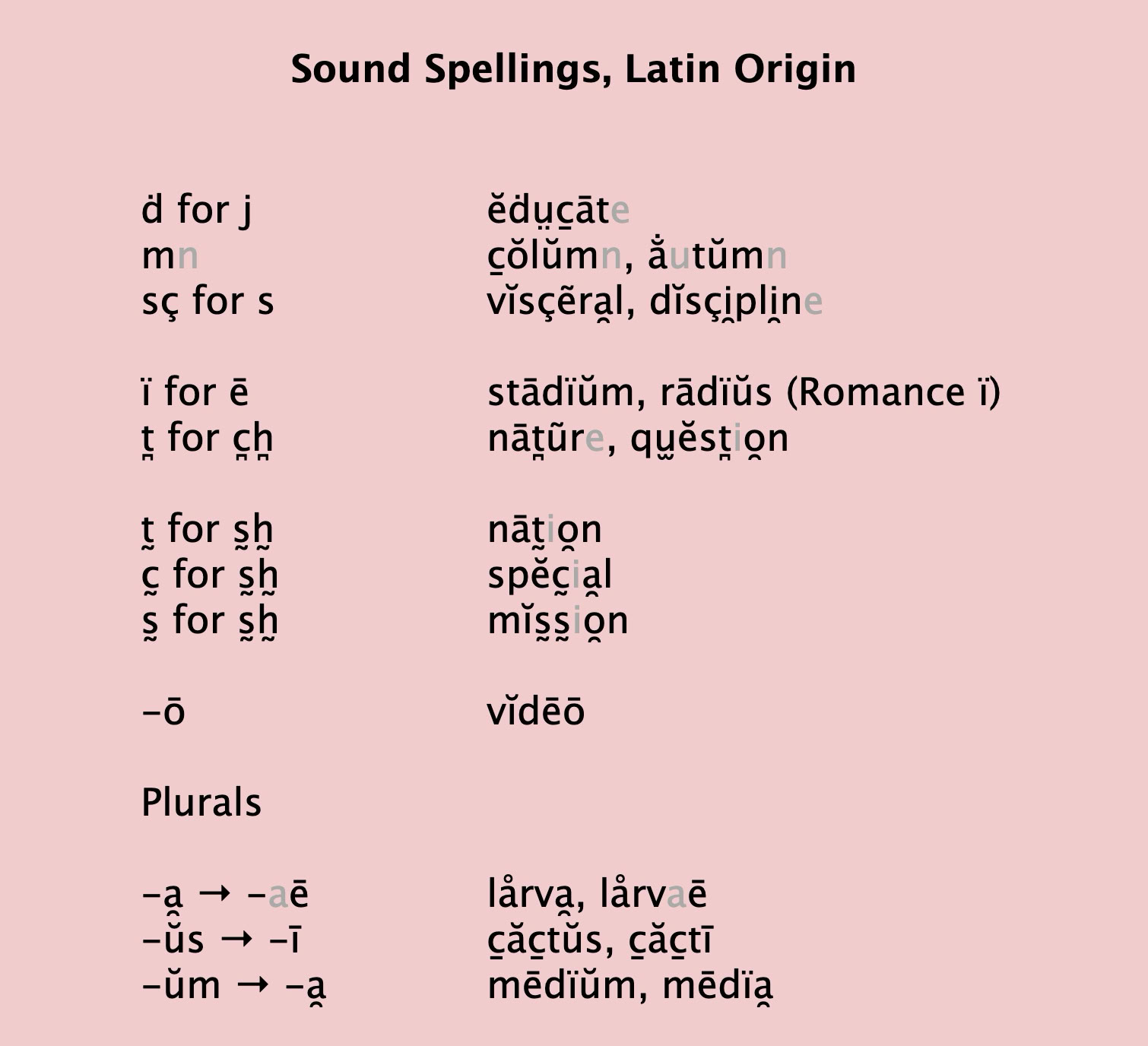
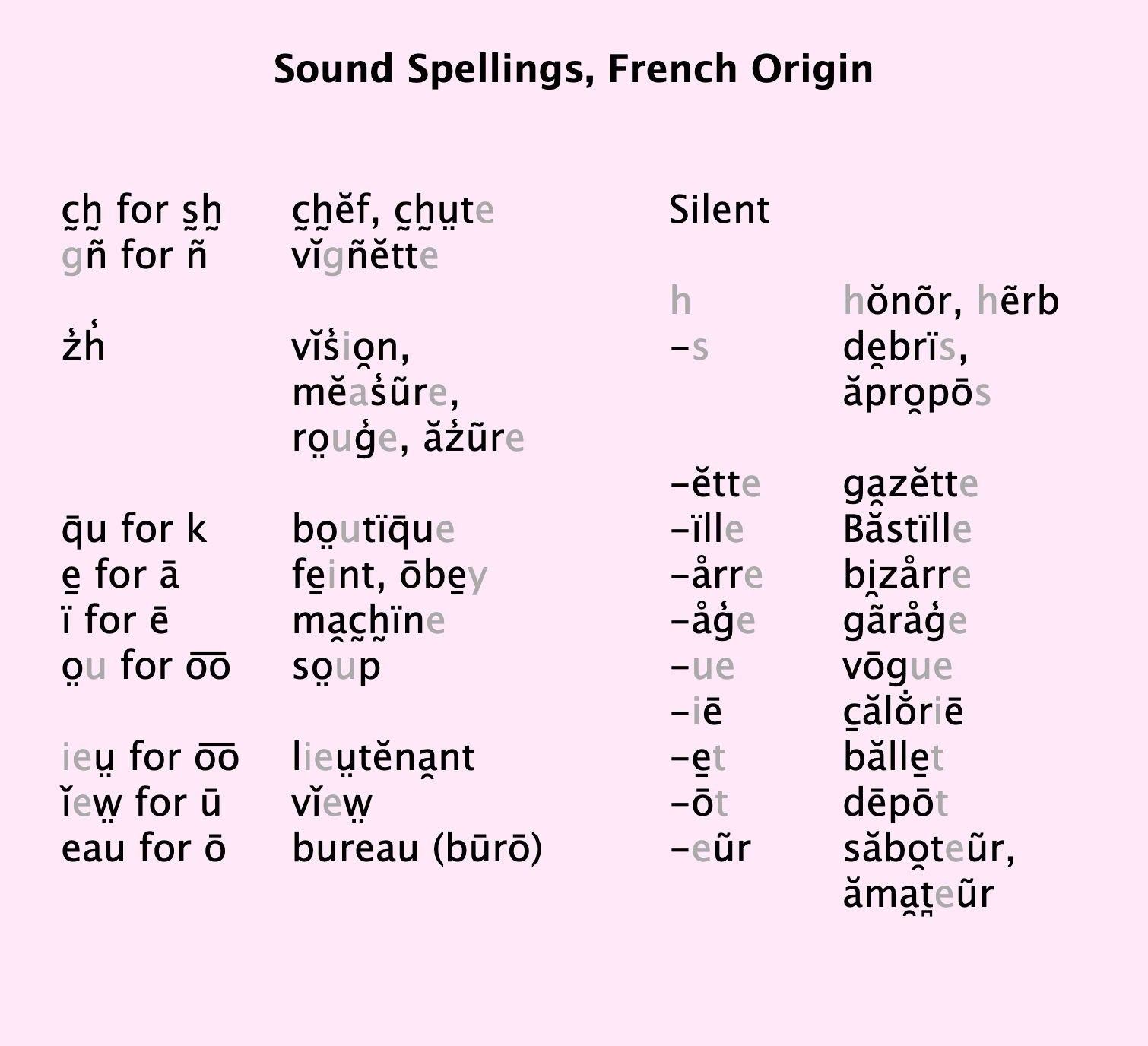
40L’s Sound Spellings by Word Origin document explains the etymology of the patterns of the sounds that make are common to each language of origin. A simple summary of the main patterns can be seen in the squares below.
40L’s Latin and Greek morphology worksheet, also linked above, was originally designed to be used with the Syllables Spell Success Lessons but can be used as a stand alone document.
For many words, it is difficult to tell if the origin is from Latin or French, since there are many words that have similar roots from both languages. If you want to know the language of origin of any English word, just type it into the website etymology online. It is a very useful morphology resource.
40L’s Greek and Latin word root bingo gameuses 32 common Greek roots and 32 common Latin roots. Sample words and definitions are read aloud as the game is played. Interestingly, 40L volunteers found that word root retention using the game and reading definitions was better than using several different word root programs or worksheets.
Other Greek and Latin word root resources:
William Draper Swan's 1851 Spelling Book. Word Roots begin on page 93.
There are many other good word root lists and programs. You can also Google word root lists or use etymology online to research the roots of specific words. To maximize retention, it is best to limit the number of words and roots studied at a time. Most word root programs cover too many roots and words per week and have little review. A smaller number of words studied with more frequent review should be more efficient in the long run.
Studying morphology and word roots enhances your vocabulary, making it easier to understand complex texts. It also helps you understand the English language at a deeper level. This knowledge gives you a powerful tool to make your reading more rewarding.